
Torticollis—it is a big word, but what is it and how do I treat? What is the role of a
physiotherapist?
(By: Lisa Whiler, Registered Physiotherapist)
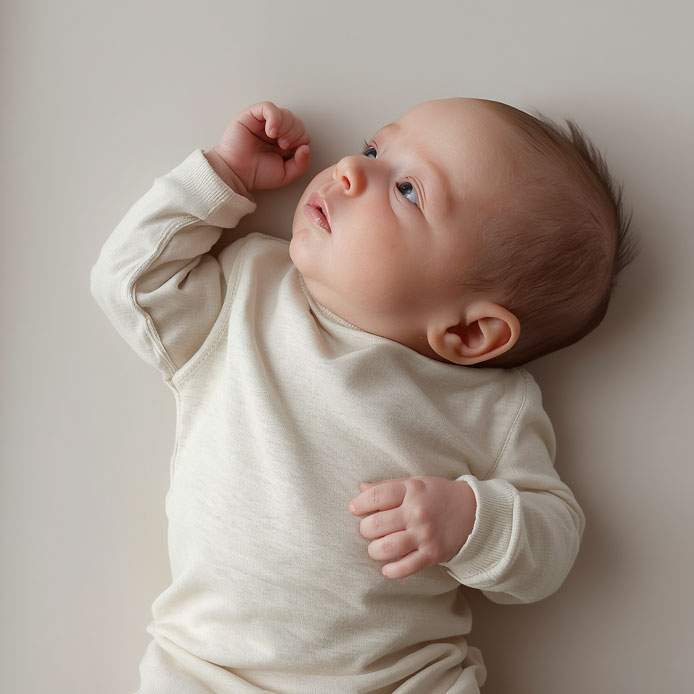
Since your baby was born have you noticed them only looking in one direction? Especially when they sleep at night! In the car seat, do they tilt their head always in the same direction? Your baby may have torticollis. It is a big word, but a condition that is completely treatable! Torticollis is a condition that causes the head to tilt to one side while the chin rotates to the opposite side. It is most commonly seen in babies from 0-6 months. The good news is that with early
intervention and proper physiotherapy, torticollis is highly treatable.
What is Torticollis?
As pregnancy progresses, the centre of gravity shifts forward, often increasing stress on the lower back, hips, and pelvis. Ligaments also become more relaxed due to hormonal changes, which can affect stability and lead to discomfort. Osteopathic treatment can help address these mechanical changes by improving joint mobility, easing muscular tension, and supporting balanced movement patterns.
How Does My Baby Get Torticollis?
- Positioning in the womb (limited space or unusual positioning)
- Birth trauma- use of forceps/vacuum during delivery, can happen with vaginal or c-section babies with the direction of pull when they come out of the womb
- Muscle tightness or a small non-tender lump in the SCM (sometimes called a “fibrotic mass”)
- Positioning after birth- always placing your child with their head in the same direction, lots of time in ‘containers’ such as car seats, swings, bouncers etc.
Common Signs of Torticollis
- Head tilted to one side
- Limited ability to turn the head
- Preference for looking in one direction
- Flat spot on one side of the head (plagiocephaly)
- Tightness or a small lump in the neck

Torticollis and Plagiocephaly: What’s the Connection?
Torticollis and plagiocephaly (flattening of one side of the head) often go hand-in-hand in infants. A baby with torticollis tends to favour one head position. This repeated pressure on one area of the skull can lead to flattening. Over time, this may also affect facial symmetry and ear alignment. In more severe cases, your child may need a helmet to help with head shape. Early physiotherapy intervention helps address both conditions by improving neck mobility and encouraging symmetrical movement and positioning. At Footprints Therapy, our physiotherapists will show you stretches, strengthening exercises and positional changes to help resolve both the torticollis and the plagiocephaly. Our physiotherapists may refer you for osteopathy for cranialsacral therapy to help with any of the asymmetries. One of our goals is to avoid a helmet, which is more attainable when treatment is started before the age of 3 months. Have your child assessed early to learn how to help them!
Physiotherapy Treatment- what does it look like?
Treatment will be a combination of stretches, strengthening exercises and positional changes.
Stretching:
The stretches help stretch the SCM muscle that is tight. Stretching helps lengthen the tight muscle and restore normal range of motion. These should be done gently and consistently. Stretches focus on the side tilt and the rotation. The physiotherapist will teach the parents and caregivers how to perform the stretches at home safely so they can be done daily and to help resolve the torticollis as fast as possible.
Strengthening:
Strengthening is just as important as stretching to create balance in the neck. Often the SCM muscle on the opposite side gets weak from lack of use and our physiotherapists will show you how to strengthen the muscles in the neck that are weak. Often the extensor muscles also need to be strengthened which can be supported with an increase in tummy time. Some babies don’t like tummy time when they have torticollis and our physiotherapists will show you different modified ways to help support tummy time.
Positioning:
Positioning when sleeping makes a huge difference since your baby sleeps the majority of the day. It is during sleep that often we can help with the flatness at the back of the head to improve their plagiocephaly. Changing positions frequently makes a huge difference. Also, limiting time in containers (swings, car seats, bouncers) will help with your child’s development.
Gross Motor Development:
Some babies with torticollis will show a delay in gross motor development due to the asymmetries in their body. For example, they may roll in one direction and not the other. Or when they begin to sit, they may always fall to the same side. Physiotherapists can help teach your baby how to achieve each gross motor milestone from lifting their head in tummy time to rolling to sitting to kneeling to crawling etc.

The Role of a Physiotherapist
A physiotherapist plays a critical role in both assessment and treatment of torticollis.
Assessment Includes:
- Evaluating range of motion in the neck
- Identifying muscle tightness or weakness
- Observing posture and movement patterns
- Checking for associated conditions like plagiocephaly
Treatment May Include:
- A customized stretching and strengthening program
- Hands-on therapy techniques
- Education for parents/caregivers on positioning and handling
- Monitoring progress and adjusting exercises as needed
- Sleep positioning (while following safe sleep guidelines)
- Play strategies to encourage symmetrical development
When to Seek Help
Early treatment leads to the best outcomes. You should consider seeing a physiotherapist if:
- Your baby consistently tilts their head to one side or only looks in one direction
- There is a noticeable flat spot on the head
- Neck movement seems limited
Final Thoughts
Torticollis is common, but it’s also very manageable—especially when caught early. With the right combination of stretches, strengthening, and professional guidance, most individuals see excellent improvement.
If you suspect torticollis, don’t wait. A physiotherapist can provide the support and plan needed to restore movement, improve symmetry, and prevent long-term complications.