
Paediatric Pelvic Health Physiotherapy: What Parents Need to Know
(By: Sara Riazi )
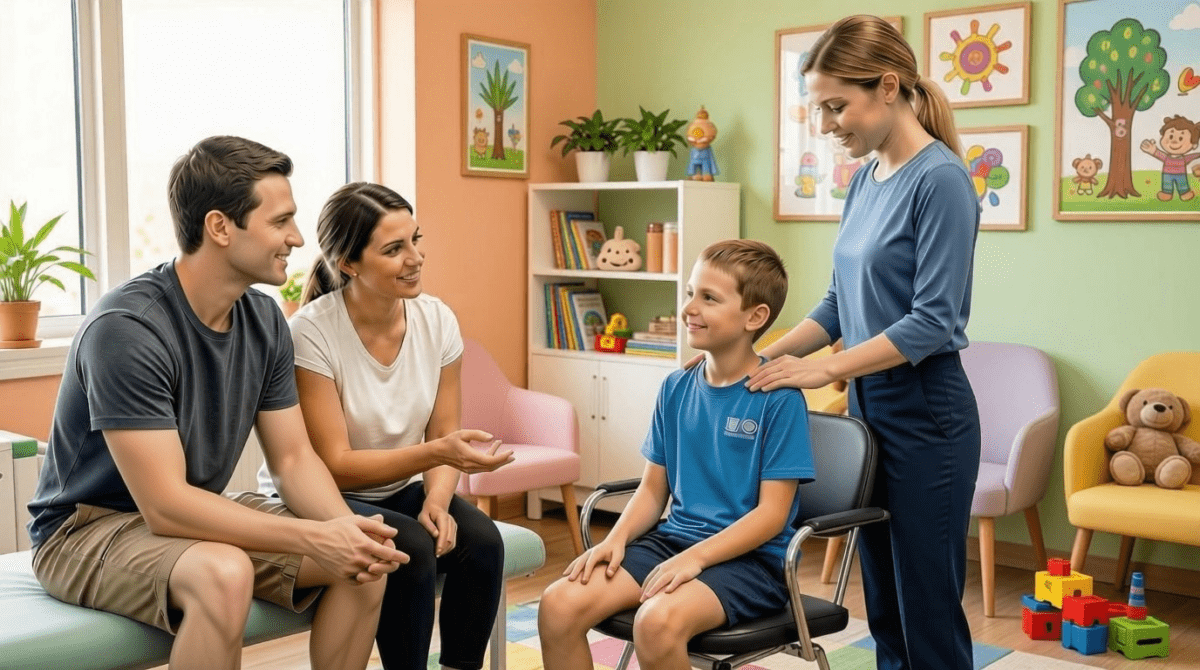
When most people hear “pelvic health physiotherapy,” they picture adult treatment which can involve internal assessment and manual therapy. Paediatric pelvic health is a different discipline entirely and understanding that difference can help parents feel more comfortable seeking help for their child.
How Paediatric Pelvic Health Differs From Adult Care
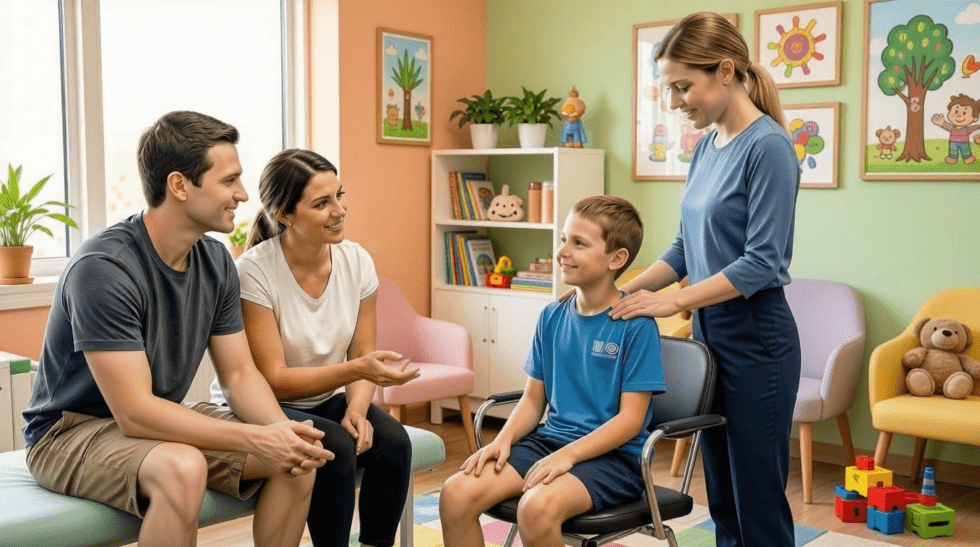
The biggest distinction is simple but important: there is no internal work involved in paediatric pelvic health physiotherapy. Treatment is entirely external and non-invasive. Sessions typically look more like guided play, coaching, and movement education.
Instead of internal assessment, paediatric physiotherapists rely on:
- Observation of posture, movement patterns, and breathing
- External palpation (through clothing, over the abdomen) to assess muscle tension and coordination – only done with explicit consent from child and parents
- Conversations and questionnaires about bathroom habits, diet, and daily routines
- Simple, child-friendly exercises that build body awareness
This makes the approach appropriate and comfortable for children, and sessions are designed to feel safe, low-pressure, and even fun.
What a Paediatric Pelvic Health Assessment Looks At:
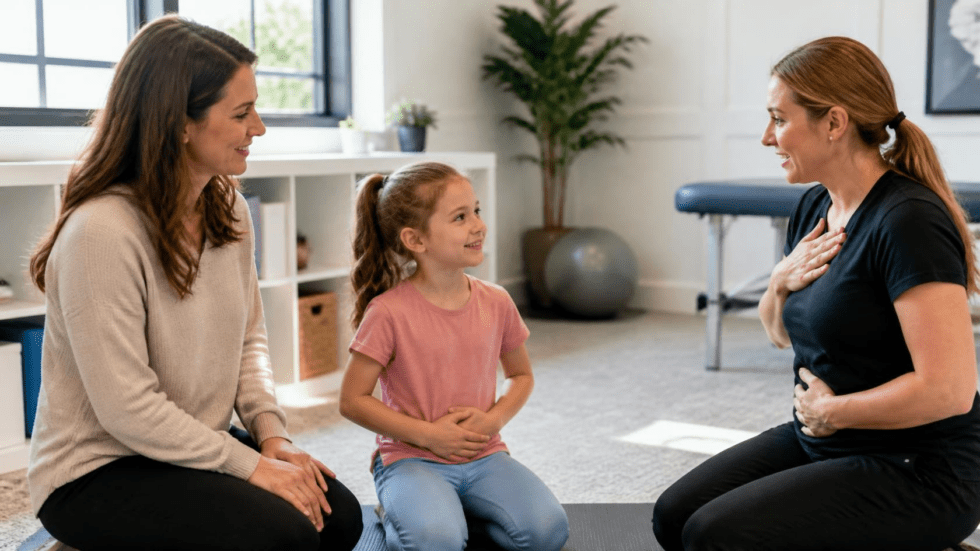
- Breathing Patterns
- Breath and the pelvic floor are closely linked.
- Posture
- Posture assessment looks at how a child sits, stands, and holds themselves throughout the day, and specifically how they’re positioned when using the toilet.
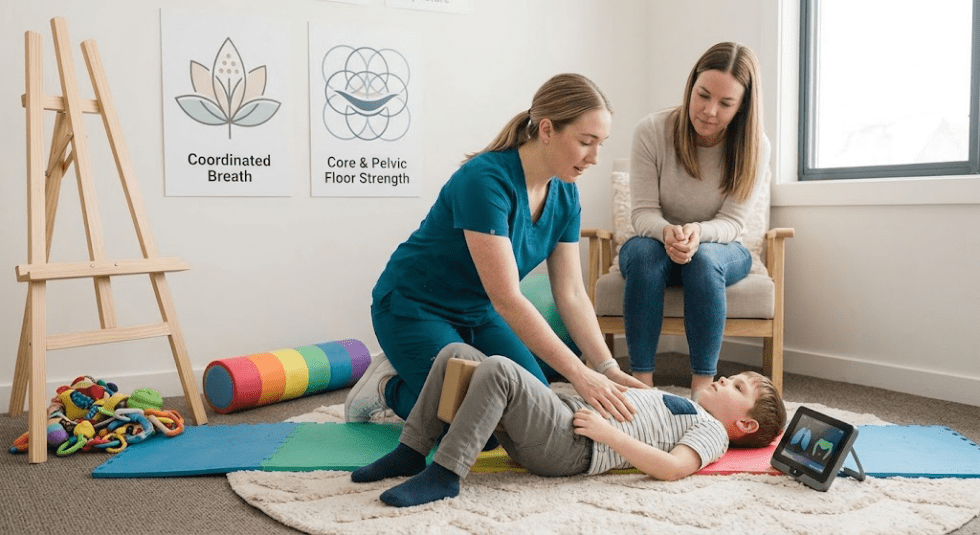
- Core Activation
- The “core” here includes the deep abdominal muscles, diaphragm, and pelvic floor working together as a system.
- Bathroom Habits
- A detailed history of toileting habits is central to assessment
Conditions Pediatric Pelvic Health Physiotherapy Can Help With:
- Constipation
- Fecal incontinence
- Urinary incontinence
- Bedwetting (nocturnal enuresis)
These issues are common, often more so than families realize, and they’re rarely about a child being “lazy” or misbehaving. In most cases, there’s an underlying physical or habitual cause that responds well to targeted intervention.
What Treatment Actually Looks Like
Given the focus areas above, treatment centers on two main pillars:
- Breathwork
- Core and pelvic floor coordination
- Education for parents and kids — demystifying what’s happening in the body, which reduces shame and anxiety around leakage
- Biofeedback tools (only with explicit consent from child and parents)
Why Early Intervention Matters
Bladder and bowel issues in children can affect self-esteem, school attendance, sleep, and family stress levels. Because pediatric pelvic health physiotherapy is non-invasive and approaches these issues through simple, teachable skills (breathing, posture, and body awareness), it’s a low-barrier, effective first step for many families before considering other interventions.
If your child is dealing with constipation, leakage, or bedwetting, know that it’s more common than you think, and it’s treatable. A paediatric pelvic health physiotherapist can help and works closely with the child’s medical team to ensure a holistic approach to care.
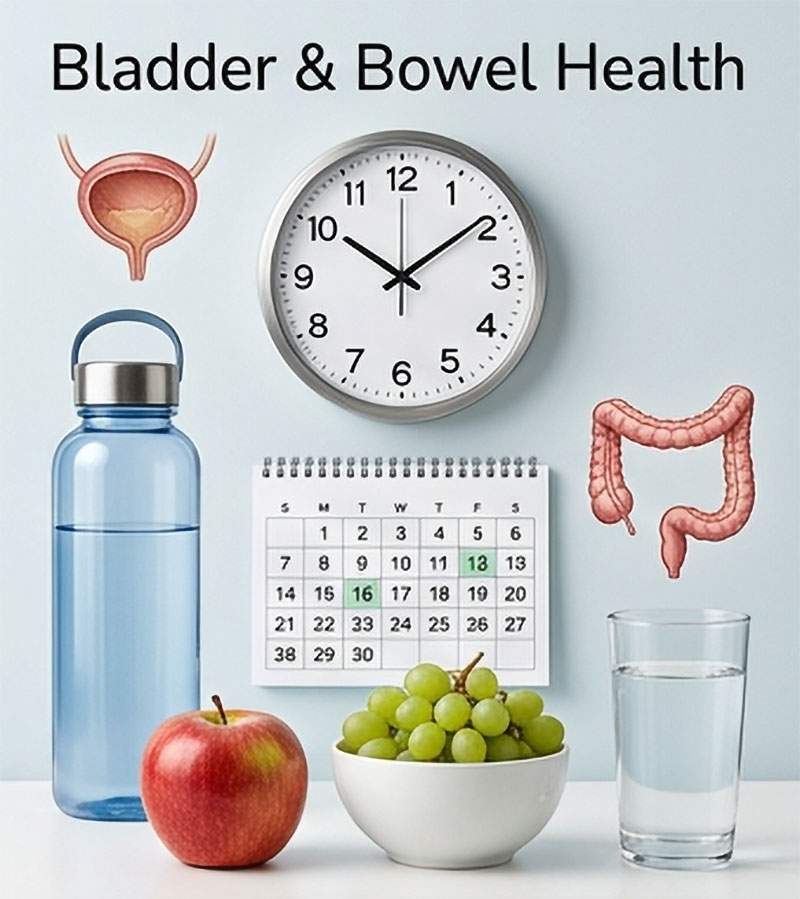
Around these two pillars, therapists often add:
- Toilet posture coaching
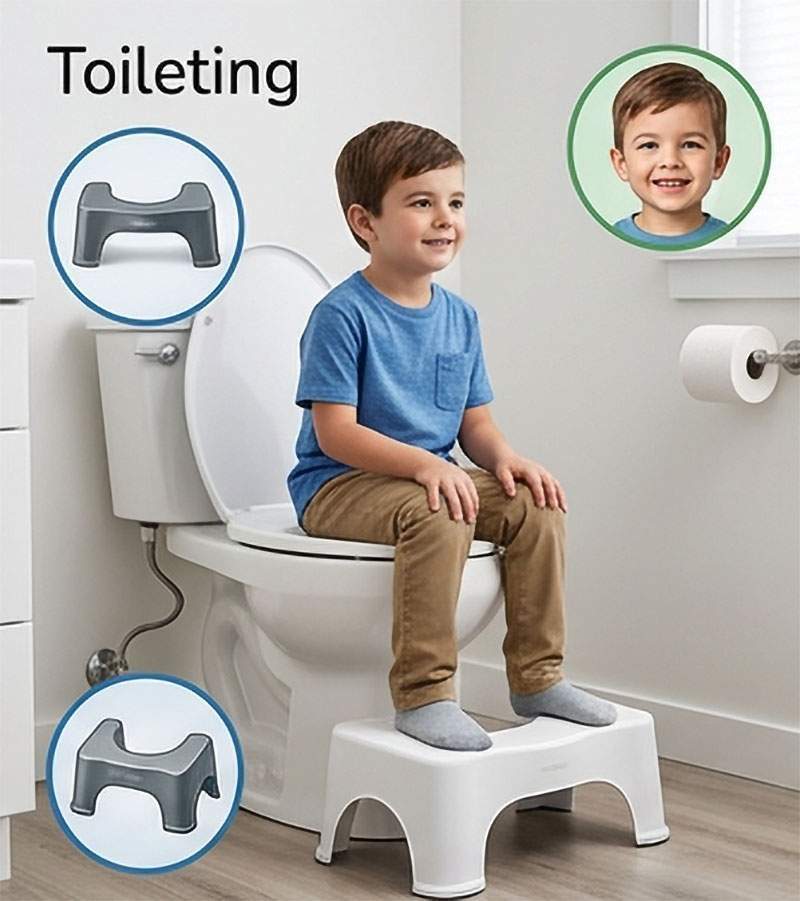
- Bladder and bowel habit training