
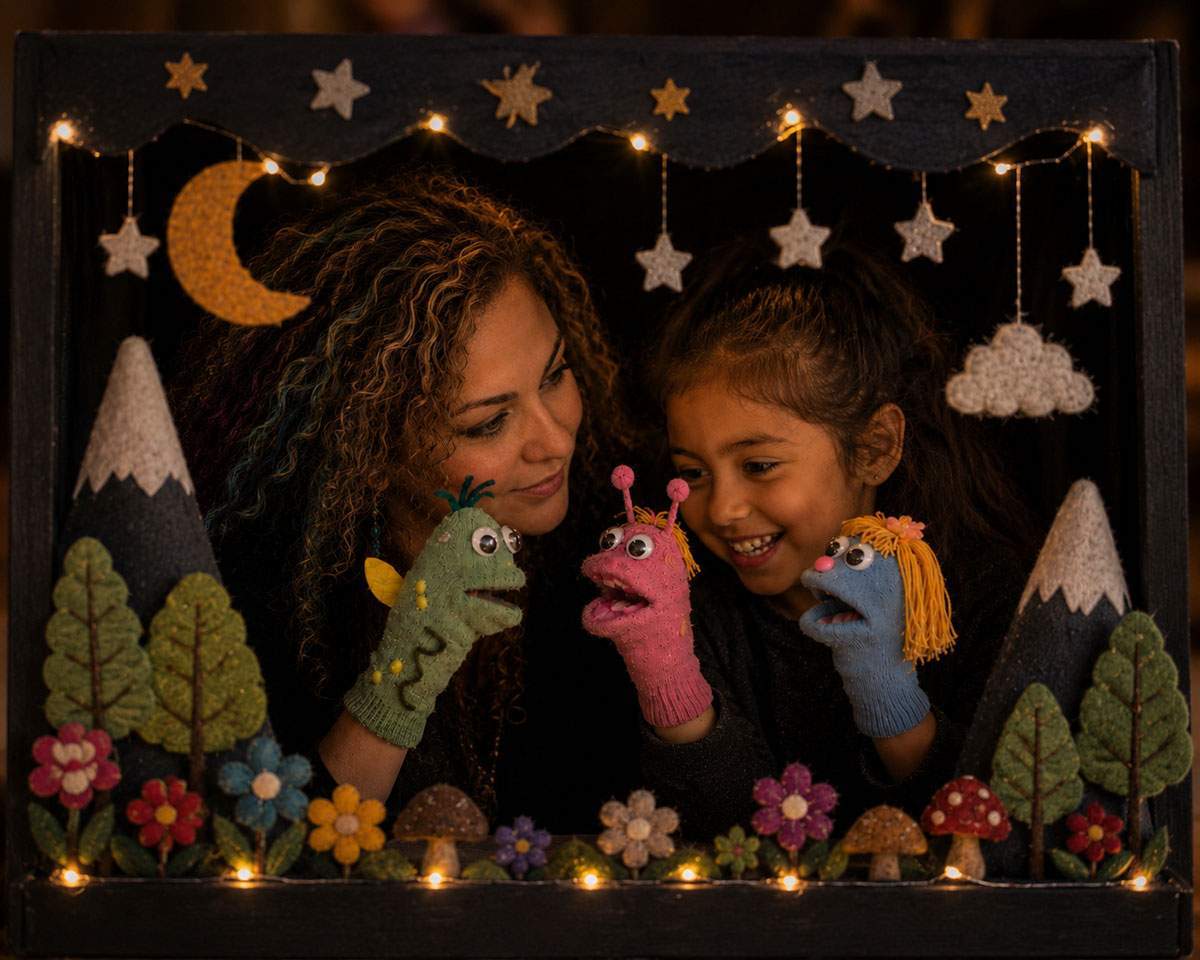
Puppetry in Expressive Arts Therapy: Creating Space for Emotional Regulation, Expression, and Relationship
(By: Setareh Delzendeh )
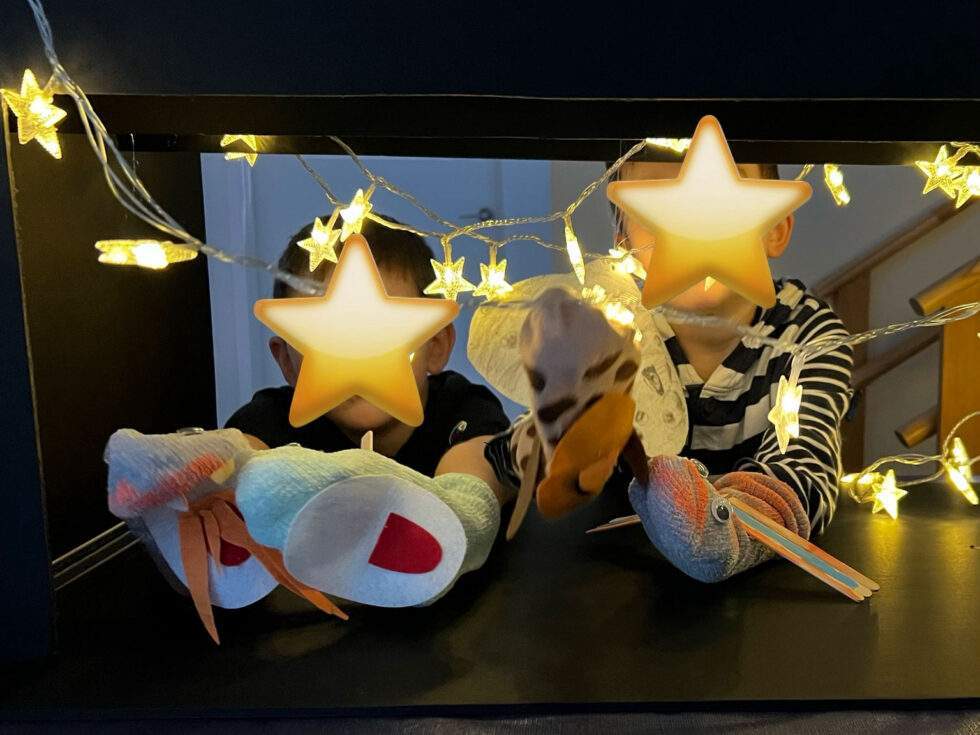
Collaborative puppet-making and storytelling process in expressive arts therapy sessions.
In expressive arts therapy, puppets can become far more than creative objects. They can act as bridges between inner emotional experiences and external expression, offering children a symbolic and safe way to explore emotions, relationships, fears, strengths, and conflicts.
Unlike direct verbal conversation, puppetry allows children to communicate through metaphor, projection, movement, voice and story. For children who experience big emotions or difficulty with emotional regulation, the creative distance offered through character making and storytelling can create a sense of safety while still allowing important emotional material to emerge.
In one recent therapeutic process with a child client (identifying details have been changed
for confidentiality), emotional regulation became one of the central themes of the work. The
process unfolded over five to six sessions, allowing trust, safety and therapeutic
relationship building to develop gradually over time.
During the early sessions, the focus was on getting to know one another and building
connection through creative and playful inquiry. Together, we explored questions such as:
What do you enjoy? What is your favorite color? What emotions feel easiest or hardest for
you? What happens in your body when you become angry? How do you calm yourself when
emotions feel overwhelming?
Through drawing, movement, storytelling, and conversation the child was invited to explore
emotional experiences visually and symbolically. We created self-portraits representing
different emotional states such as happiness, sadness, and anger. We also created family
portraits together, exploring sibling relationships, emotional closeness, and relational
dynamics within the family system.
Alongside these explorations, we incorporated grounding and regulation practices using
breath, movement, and sensory awareness. One of the tools we used was an expandable
breathing sphere (often called a Hoberman Sphere) which supported visual and embodied
breathing exercises. Shaking, movement, and sensory-based activities were also integrated
to help reconnect with the body and nervous system before moving into deeper imaginative
work.
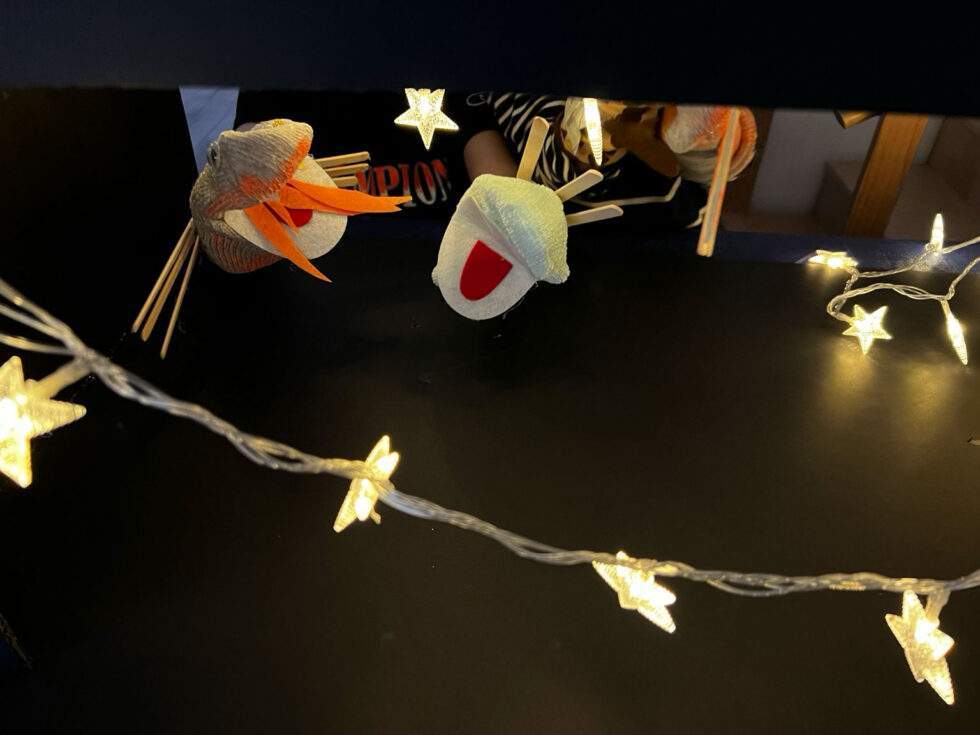
Puppetry can create symbolic distance, allowing emotions and relational dynamics to emerge
safely through play and imagination.
As trust and creative engagement developed, the sessions gradually evolved into character creation and narrative work.
Rather than directing the process myself, I followed the child’s lead. Based on the emotional themes, imagery and ideas emerged during sessions as we collaboratively created puppet characters together. The child became the director of the imaginative world while I supported and expanded the process alongside him.
Using principles inspired by the Six-Part Story Method developed by Mooli Lahad, we began building stories around the characters. Through these stories, emotional conflicts, fears, protective impulses, and relational dynamics emerged naturally through symbolic play.
As the process evolved, the child invited his younger brother to participate in creating new characters and scenes. Together, we created puppets, costumes, stage elements, props, lighting and eventually a full puppet performance that was later shared with the parents.
Another important layer that emerged through the process related to the older child’s need for agency, personal space, and emotional recognition within the sibling relationship.
According to the mother, many of the conflicts between the siblings occurred primarily at home, particularly around shared space, toys, and interactions between the brothers. Although the child did not directly verbalize these frustrations in conversation, aspects of these experiences began to appear symbolically through storytelling, puppet interactions, and creative play.
At times, the older child appeared to feel that his younger brother was not fully understanding or respecting his space, boundaries, or needs. This often seemed connected to moments of emotional escalation and the need to become louder or more controlling in order to feel heard.
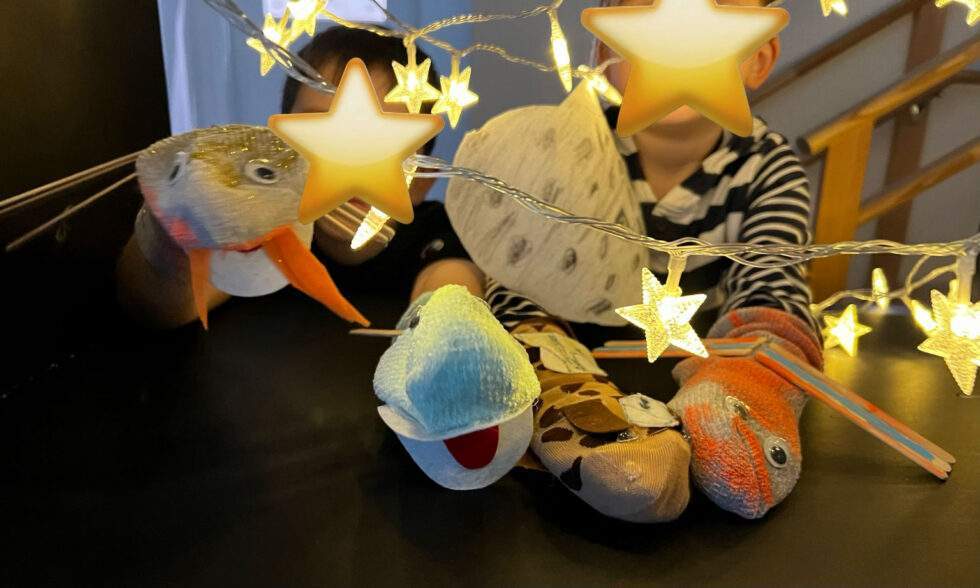
Shared creative processes can support cooperation, emotional expression, and relational connection between siblings.
Rather than approaching these reactions simply as behavioral problems, the expressive arts process created an opportunity to explore the emotional needs underneath them.
Through collaborative art-making, storytelling, and puppetry, a shared creative space gradually developed in which both children could participate safely and meaningfully. The older child appeared to experience a stronger sense of agency, leadership, and emotional space within the creative process, while the younger brother appeared to feel included, respected, and genuinely excited to participate and support the collaborative work.
The puppet making and performance process allowed the siblings to engage with one another through imagination, cooperation, and shared creation rather than conflict alone. Within this symbolic and creative environment, both children were able to experiment with different relational roles and ways of communicating.
Alongside the storytelling process, breathwork, somatic awareness, body language, tone of voice, pacing, and eye contact were also explored as ways of supporting emotional regulation and communication. The child was gradually invited to notice that being heard did not always require yelling or escalation, and that emotions, boundaries, and needs could also be communicated through grounded presence, regulated voice, and creative
expression.
Within the puppet stories themselves, themes involving bullying, injustice, protection, and care repeatedly appeared. One of the most moving aspects of the process was witnessing how strongly the older child’s puppet character protected his younger brother within the story world.
What emerged through the creative process was not simply a puppet performance, but a therapeutic space where emotional regulation, imagination, embodiment, relationship, and self-expression could coexist.
In expressive arts therapy, puppetry offers children an opportunity not only to tell stories, but also to rehearse emotional experiences, externalize internal conflicts, experiment with new responses, and experience themselves as capable creators within their own narratives.
Sometimes a puppet can say what words alone cannot.
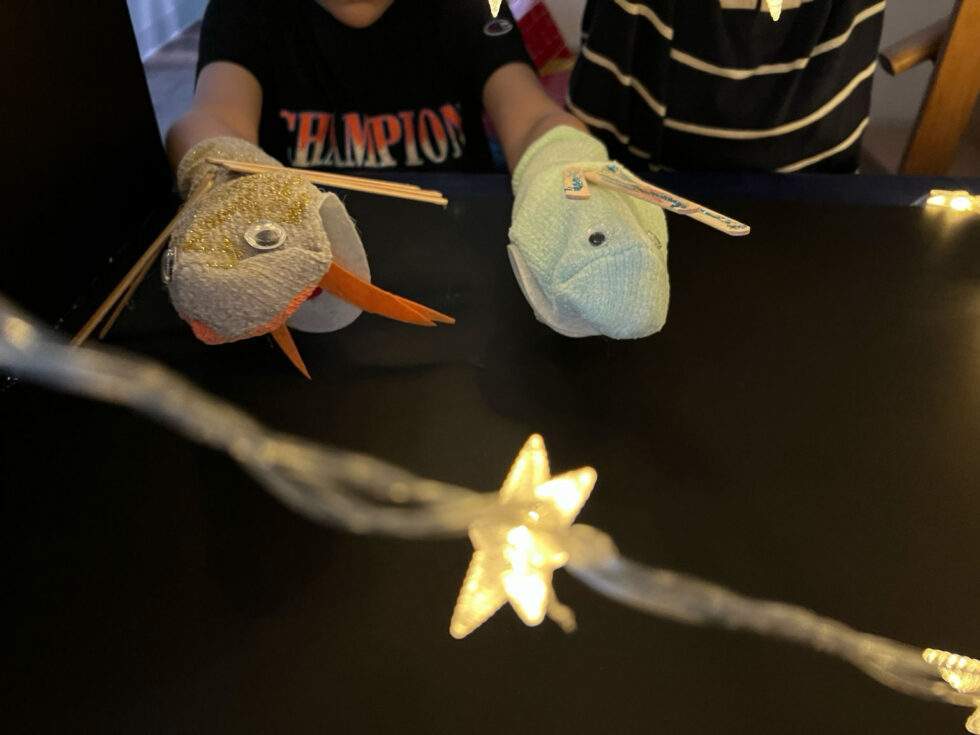
Handmade puppets created collaboratively during the therapeutic process.